
 WhatsApp Quick Enquiry
Best Non-Stick Cookware Products for Daily Cooking
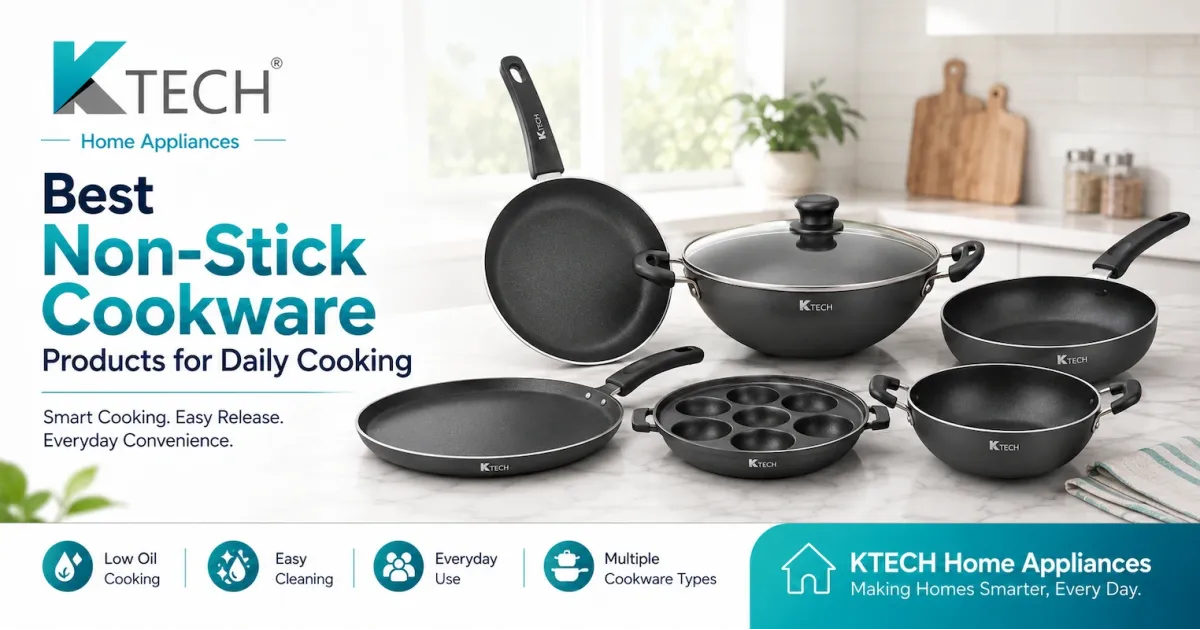
By Ktech Admin - 01/09/2026 - 0 comments
Non-stick cookware has become a useful part of many Indian kitchens because it supports a wide range of everyday recipes while making food release and routine cleaning more convenient. From breakfast favourites such as dosa and omelette to curries, stir-fries, biryani and snacks, the right cookware can make daily meal preparation easier.
Choosing the best non-stick cookware products for daily cooking does not mean purchasing every pan or the largest cookware set available. A better approach is to understand the dishes your family prepares most often and select cookware according to cooking method, portion size, cooktop and available storage space.
A practical collection may include a dosa tawa, frying pan and kadai first, with specialised cookware added only when it suits your regular cooking habits.
Why Non-Stick Cookware Is Useful for Everyday Kitchens
Different cookware shapes are designed for different types of food preparation. A flat tawa works differently from a deep kadai, while a fry pan provides different cooking space from a biryani pot.
Non-stick cookware can be useful for common dishes such as:
- Dosa
- Uttapam
- Chapati
- Omelette
- Pancakes
- Sauteed vegetables
- Paneer dishes
- Curries
- Gravies
- Shallow frying
- Paniyaram
- Appam
Instead of selecting products only by appearance, consider how often you will use each item and whether its size suits your household.
Non-Stick Dosa Tawa for Breakfast Cooking
A dosa tawa is one of the most practical cookware products for South Indian households.
Its flatter cooking surface is suitable for spreading batter and preparing foods that need more open cooking space.
A non-stick tawa can be useful for:
- Dosa
- Uttapam
- Chapati
- Roti
- Paratha
- Omelette
- Pancakes
When choosing a non-stick tawa, consider the diameter, body thickness, handle grip and cooktop compatibility.
A larger surface may be convenient for families preparing several dosas or chapatis, while a compact tawa can be easier to store in a smaller kitchen.
Non-Stick Fry Pan for Quick Meals
A fry pan is a versatile option for small and medium everyday cooking tasks.
It can be used for:
- Omelettes
- Vegetable sautéing
- Paneer preparation
- Pancakes
- Shallow frying
- Reheating
- Quick stir-fries
When choosing non-stick pans for everyday cooking, the ideal size depends on the quantity normally prepared. Smaller families may prefer a compact pan, while larger households can consider a wider cooking surface.
Check whether the handle feels secure and comfortable, especially if the pan will be used frequently.
Non-Stick Kadai for Curries and Frying
A kadai provides more depth than a frying pan, making it suitable for dishes that involve larger quantities, liquids or deeper frying.
A non-stick kadai can support:
- Vegetable curries
- Kurma
- Paneer gravies
- Chicken gravies
- Stir-frying
- Sambar preparations
- Deep frying
- Mixed vegetable dishes
When choosing a kadai, capacity is important.
A smaller kadai can suit couples or small families, while larger households may require more space for curries and family-size portions.
Consider handle placement and whether the kadai includes a lid if covered cooking is part of your normal preparation.
Non-Stick Pots for Biryani and Larger Meals
Deeper cookware can be useful for dishes that need more space for ingredients and mixing.
A non-stick pot may suit:
- Biryani
- Pulao
- Ghee rice
- Sambar
- Kurma
- Vegetable gravies
- Stews
- Larger family meals
For biryani and rice preparations, sufficient capacity helps reduce crowding while cooking.
Before purchasing, consider the pot's overall size, handle arrangement, lid design and storage requirements.
Paniyaram Pan for Traditional Snacks
A paniyaram pan is useful for households that regularly prepare kuzhi paniyaram and similar dishes.
Its individual cavities help shape each portion and make batch preparation organised.
It may be used for:
- Kuzhi paniyaram
- Vegetable paniyaram
- Sweet paniyaram
- Egg-based snack preparations
Specialised cookware provides the most value when the corresponding recipe is prepared regularly.
If paniyaram is only made occasionally, prioritising a versatile tawa, fry pan or kadai may be more practical when building a new cookware collection.
Appachatty for Appam
An appachatty is designed for appam and other recipes that benefit from a curved cooking surface.
The shape helps accommodate the traditional appam preparation style, with thinner edges and a softer centre.
For homes where appam is prepared frequently, an appachatty can be a useful addition rather than trying to use a regular frying pan for the same purpose.
How to Choose the Right Non-Stick Cookware
Match the Cookware to the Recipe
Start with the food your family prepares regularly.
Dosa and chapati: Choose a tawa.
Omelette and sauteing: Choose a fry pan.
Curries and frying: Choose a kadai.
Biryani and larger gravies: Choose a deeper pot.
Paniyaram: Choose a paniyaram pan.
Appam: Choose an appachatty.
This approach prevents unnecessary cookware from occupying kitchen storage.
Select the Right Size
Cookware should match your family size and normal cooking quantity.
Consider:
- Number of family members
- Portion size
- Cooking frequency
- Burner size
- Available storage space
Oversized cookware may be inconvenient for small portions, while cookware that is too small can require repeated batches.
Check Cooktop Compatibility
If the kitchen uses induction, confirm that the exact cookware model is designed for induction use.
Do not assume every non-stick pan, tawa or kadai is compatible with every cooktop.
For LPG gas stoves, check that the base sits steadily on the burner.
Check the Handle
Handles should provide a comfortable and secure grip.
This is particularly important for cookware that may become heavier when filled with curry, rice or other prepared food.
Consider Lid Requirements
Kadais and deeper pots may benefit from lids for covered cooking, while a dosa tawa generally does not require one for everyday use.
Choose accessories according to the way the cookware will actually be used.
How to Care for Non-Stick Cookware
Proper maintenance can help keep cookware practical for regular kitchen use.
Follow these basic practices:
- Follow the product-specific care instructions
- Use suitable cooking utensils
- Avoid cutting food directly on the cooking surface
- Avoid unnecessary overheating
- Allow cookware to cool appropriately before cleaning
- Use non-abrasive cleaning materials
- Keep handles and fittings clean
- Avoid stacking cookware in a way that scratches the surface
If the cooking surface becomes heavily damaged, scratched or warped, inspect the cookware before continuing regular use.
Product-specific manufacturer instructions should always take priority over general care advice.
Build a Practical Non-Stick Cookware Collection
You do not need to purchase every type of cookware at once.
For many homes, a simple starting collection may include:
Dosa Tawa
Useful for breakfast dishes, chapati and similar flat cooking requirements.
Fry Pan
Suitable for omelettes, sautéing, shallow frying and quick food preparation.
Kadai
Useful for curries, gravies and deeper frying.
Additional products can then be selected according to your cooking habits.
A family that regularly prepares biryani may add a deeper pot. Homes that frequently prepare paniyaram or appam can add specialised cookware later.
This creates a collection based on usage instead of quantity.
Non-Stick Cookware for Retail Stores and Bulk Buyers
Non-stick cookware is also relevant for kitchenware stores, supermarkets, dealers and other business buyers.
A balanced retail range can include:
- Dosa tawas
- Fry pans
- Kadais
- Biryani pots
- Gravy pots
- Paniyaram pans
- Appachatty
Retailers should decide quantities according to local customer demand, price segments and past product movement rather than stocking every item equally.
Every market can have a different product mix, so actual customer enquiries and sales data should guide repeat purchasing.
Why Explore KTech Non-Stick Cookware
KTech Home Appliances offers different non-stick cookware categories intended for everyday cooking needs.
The collection can be explored across:
- Non-Stick Pans
- Non-Stick Pots & Kadais
- Non-Stick Tawas
- Specialised cookware options
This makes it easier for households to select products based on the recipe being prepared instead of relying on one pan for every cooking task.
Retailers and bulk buyers can also build their assortment around products relevant to their own customers.
Frequently Asked Questions
Which Non-Stick Cookware Is Best for Daily Indian Cooking?
A dosa tawa, fry pan and kadai can cover many common everyday cooking requirements.
Additional specialised cookware can be added according to the recipes prepared regularly.
Which Non-Stick Cookware Is Best for Dosa?
A dedicated dosa tawa is generally suitable because its flatter surface provides space to spread batter.
Should I Buy a Fry Pan or Kadai?
Both serve different purposes.
A fry pan is useful for shallow frying, omelettes and sautéing, while a kadai provides additional depth for curries, gravies and frying.
Can Non-Stick Cookware Be Used on Induction?
Only use cookware on induction when the specific model is designed for induction cooking.
Check the product specification before purchasing.
How Should Non-Stick Cookware Be Cleaned?
Allow the cookware to cool appropriately and clean it according to the manufacturer's instructions.
Avoid harsh or abrasive materials that may damage the cooking surface.
Conclusion
Choosing the best non-stick cookware products for daily cooking becomes easier when each product is matched to the food your household actually prepares.
A dosa tawa is useful for breakfast cooking, a fry pan supports quick preparations, a kadai works well for curries and frying, while deeper pots can handle biryani and larger meals.
Specialised products such as paniyaram pans and appachatty can be added according to family cooking habits.
Start with the cookware you will use most often and gradually build a collection based on household size, available storage, cooktop compatibility and everyday requirements.
Explore KTech Non-Stick Cookware to find suitable cookware for your regular Indian cooking needs.